10 Best AI-Proof Careers for Creative Thinkers
Last updated on 29 January, 2026

Danuta DetynaWriter, Professional Association of Resume Writers and Career Coaches (PARWCC)

Our customers have been hired by*:
In a world of rapid AI advances, choosing a secure career can feel daunting. The good news is that AI is more likely to support human work than replace it. For creative thinkers, this means that uniquely human skills, such as creativity, empathy, problem-solving, and ethical judgment, are becoming more valuable.
In the UK, government and industry are investing heavily in upskilling to meet this demand. The result: exciting, future-proof career paths where imagination and human insight thrive alongside technology. Let me present the best AI-proof careers for creative thinkers.
Create an effective CV in minutes. Choose a professional CV template and fill in every section of your CV in a flash using ready-made content and expert tips.
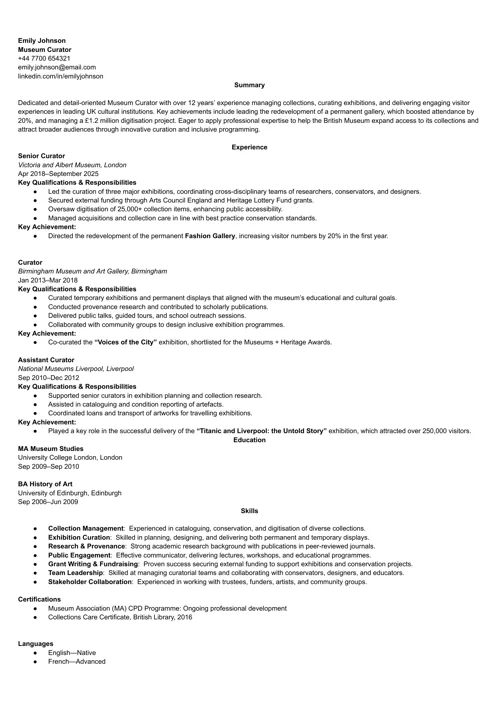
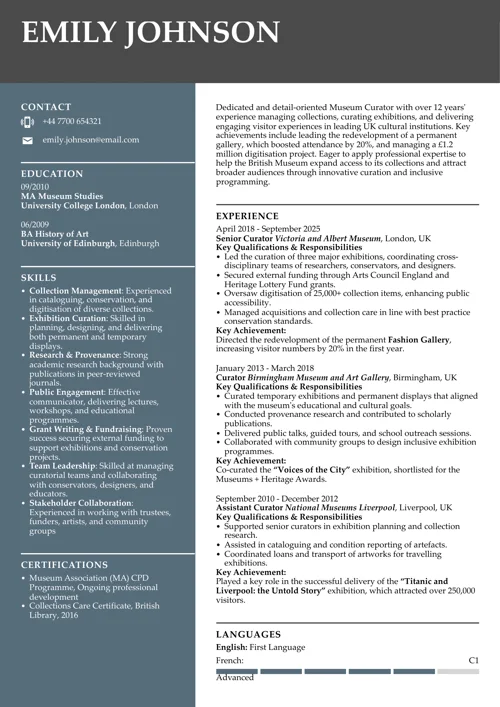
We created the sample on the left using our builder. See other good CV examples like this one.
Interested in more related articles? Check these out:
- Careers Safe from Artificial Intelligence Takeover
- Jobs Likely to Disappear Because of AI
- How to Recognise a Harmful Workplace
- How Workers Feel About the Economy in 2025
- Career Report: Loyalty vs Frequent Moves
1. Art therapist
Why it’s AI-resistant:
Therapy relies on trust, empathy, and creative engagement: qualities that AI can’t authentically replicate. While AI tools assist with diagnostics or records, the therapeutic alliance remains purely human. It’s estimated that around 10–30% of UK jobs are classed as “highly automatable,” yet it’s doubtful that AI could handle the personal relationships, emotional support, and creativity that art therapists provide.
UK Outlook:
- NHS = largest UK employer (~1.5m staff).
- NHS Long Term Workforce Plan projects up to 800k new roles by 2036/37, including mental health and allied health.
- Mental health funding and creative therapy programmes are expanding across hospitals, schools, and community settings.
Entry Routes:
- HCPC-approved Master’s in art therapy/art psychotherapy, plus HCPC registration.
- Prior degree in art/design or psychology + experience working with vulnerable groups.
Alternative career paths:
Also includes music therapy, play therapy, and drama therapy, all of which combine artistic expression with emotional support.
2. UX designer
Why it’s AI-resistant:
UX design is human-centred problem-solving: understanding user needs, creating intuitive flows, and applying emotional insight to technology. AI can help analyse user data or generate design drafts, but humans decide what “feels right.” By 2035, an estimated 10 million Britons will use AI in their daily tasks. This means the future belongs not just to coders, but to people who can pair technical tools with uniquely human abilities.
UK Outlook:
- The creative industries contributed £124bn GVA in 2023, and there were 2.4m jobs in this sector of the UK economy in 2023–2024.
Entry Routes:
- Degrees (design, human-computer interaction, psychology), bootcamps, and apprenticeships.
- Portfolio with user research, wireframes, and prototypes is key.
Alternative career paths:
Also includes motion graphics artists, digital illustrators, and game UX specialists—roles that blend aesthetics, storytelling, and technical skills.
3. Teacher / instructional designer
Why it’s AI-resistant:
Education is about people skills such as mentoring, motivation, and adaptability. AI can mark tests or suggest lesson plans, but human educators inspire and tailor learning to meet individual needs.
UK Outlook:
- Parliament’s July 2025 report anticipates a substantial increase in demand, estimating a need for 1,600 more secondary teachers by 2027–28 and 8,400 to 12,400 more further education teachers by 2028–29.
- Strong investment in vocational and technical education (Skills for Life, T-levels).
Entry Routes:
- For school teaching: QTS via PGCE or school-based training; FE requires sector-specific qualifications.
- Instructional design: degrees or CPD in education/learning technology.
Alternative career paths:
Also includes corporate trainers, curriculum developers, and learning experience designers, all of whom require creative communication and effective learner engagement.
4. Management consultant
Why it’s AI-resistant:
Strategy, persuasion, and organisational insight are human strengths. AI provides analysis; consultants provide context, creativity, and influence.
UK Outlook:
Entry Routes:
- Graduate schemes (often any discipline with strong analytical skills) and lateral moves from industry.
- Consulting success relies on T-shaped skills: domain expertise + broad business and digital literacy.
Alternative career paths:
Also includes brand strategists, change managers, and sustainability consultants.
5. Museum/exhibition curator
Why it’s AI-resistant:
Curators interpret culture, shape narratives, and create experiences that connect audiences to their heritage, a profoundly human endeavour.
UK Outlook:
- Heritage tourism generates billions; museums benefit from government funding.
- Growth in immersive, interactive exhibitions.
Entry Routes:
- Typical entry requires a degree in museum studies, art history, or a related field such as archaeology. In practice, progression often depends heavily on unpaid or voluntary experience gained through internships, heritage projects, or local museums. Competition is strong, and networking within the sector is valuable.
Alternative career paths:
Exhibition designers, public programme coordinators, heritage interpreters: all combining storytelling with design.
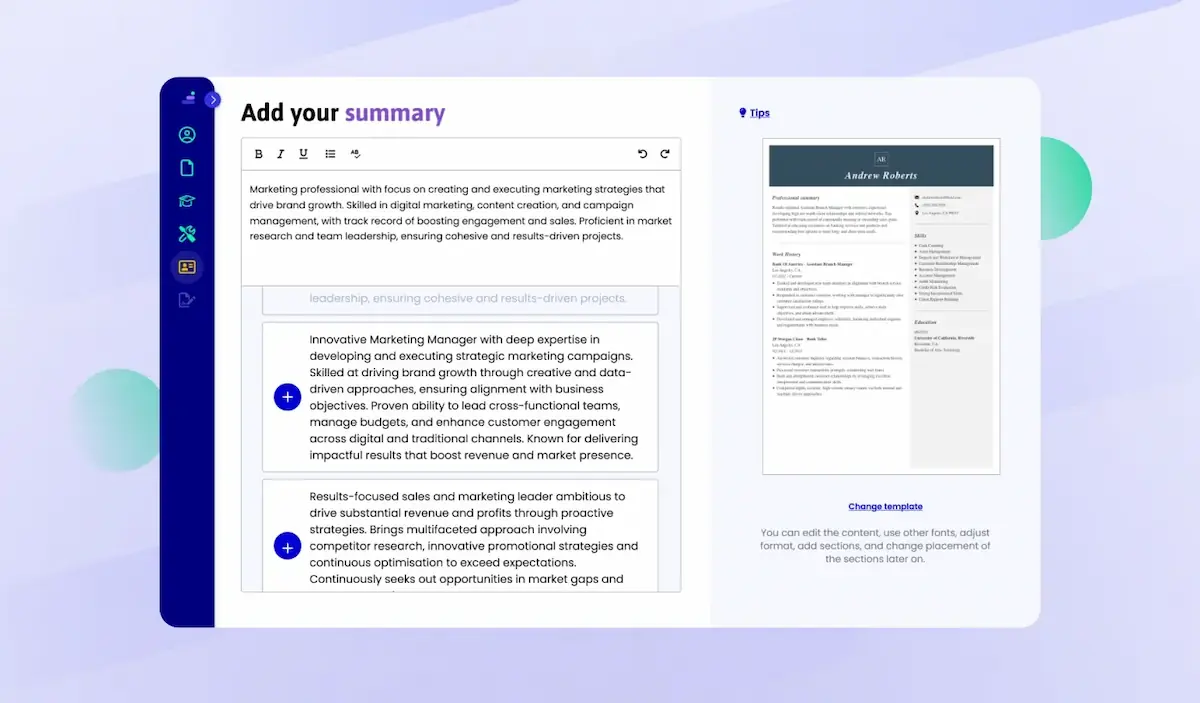
A strong CV summary will convince the recruiter you’re the perfect candidate. Save time and choose a ready-made personal statement written by career experts and adjust it to your needs in the LiveCareer CV builder.
6. Sustainable architect / urban designer
Why it’s AI-resistant:
Sustainable design integrates creativity, technical know-how, and ethical/environmental judgment. AI can’t balance human and ecological priorities.
UK Outlook:
- UK net-zero targets are driving growth in green building and urban regeneration.
- Funding for energy-efficient retrofits and sustainable transport hubs.
Entry Routes:
- Accredited architecture degrees, RIBA stages, and urban design courses.
Alternative career paths:
Landscape architects, eco-product designers, and environmental brand communicators.
7. Content strategist / creative producer
Why it’s AI-resistant:
Emotional resonance, brand authenticity, and cultural nuance require human judgment, even when AI assists with the drafting process.
UK Outlook:
- Demand in brand storytelling, cross-platform content, and audience engagement.
- Growth in video, podcasting, and interactive formats.
Entry Routes:
- Marketing, journalism, or media production degrees; strong content portfolio; analytics skills.
Alternative career paths:
Podcast producers, documentary filmmakers, and brand narrative consultants.
8. Artisan maker / product designer
Why it’s AI-resistant:
Algorithms can’t replicate unique craftsmanship and tactile skill. Bespoke products have cultural and emotional value.
UK Outlook:
- The UK craft sector is growing through sustainability and localism trends.
- E-commerce expands reach for makers.
Entry Routes:
- Apprenticeships, design school, or self-taught practice; digital marketing savvy helps.
Alternative career paths:
Furniture makers, jewellery designers, and restoration specialists.
9. Theatre director / live events creative
Why it’s AI-resistant:
Directing live performance involves human connection, timing, and physical presence, which are elements AI can’t reproduce.
UK Outlook:
- Theatre, music festivals, and immersive events are rebounding post-pandemic; Arts Council support continues.
Entry Routes:
- Degrees in performing arts, drama, or stage management can help, but career progression is generally less formal and more experiential. Many directors start in fringe or community theatre, gain experience as assistant directors, and build reputations project by project.
- Apprenticeships and structured training are available for stage management and production, but directing pathwaysare largely shaped byexperience and professional networks.
Alternative career paths:
Choreographers, set designers, experience designers: roles where creativity meets audience interaction.
10. Social policy designer / service designer
Why it’s AI-resistant:
Shaping policy and services for people’s needs involves empathy, stakeholder engagement, and balancing competing values, as AI can’t lead to consensus.
UK Outlook:
- Government and NGOs investing in user-centred policy design; increased demand for innovation in public services.
Entry Routes:
- Degrees in social policy, design thinking, or public administration; experience in community engagement.
Alternative career paths:
Community programme leads, public innovation managers, NGO design strategists.
Conclusion
The age of AI is not the end of creative careers—it’s a call to action for creative thinkers to amplify what makes them human. The UK’s labour market is evolving, but it’s doing so with clear signals: roles that blend human creativity, empathy, and ethics with new technology are on the rise.
Whether you’re drawn to healing through art, designing user-friendly tech, inspiring minds in a classroom, or crafting business strategies, there’s a place for you in the future economy. By choosing a path that excites your creative spirit and committing to lifelong learning, you can build a career that is not only AI-resistant but truly rewarding.
The future of work in the UK will be driven by those who imagine, empathise, and create; in other words, by you. So equip yourself, stay curious, and step confidently into that future. After all, while AI might be a powerful tool, the world still needs what only human creativity can provide.
Looking for more career advice? See these articles:
- AI CV Guide
- Top Earning Careers in the UK
- The Most In-Demand Careers in the UK
- Working in the Capital: London Job Market Tips
- How to Tell If You Nailed Your Interview
- Professional CV Samples for Every Career
You don’t have to be a CV writing expert. In the LiveCareer CV builder you’ll find ready-made content for every industry and position, which you can then add with a single click.
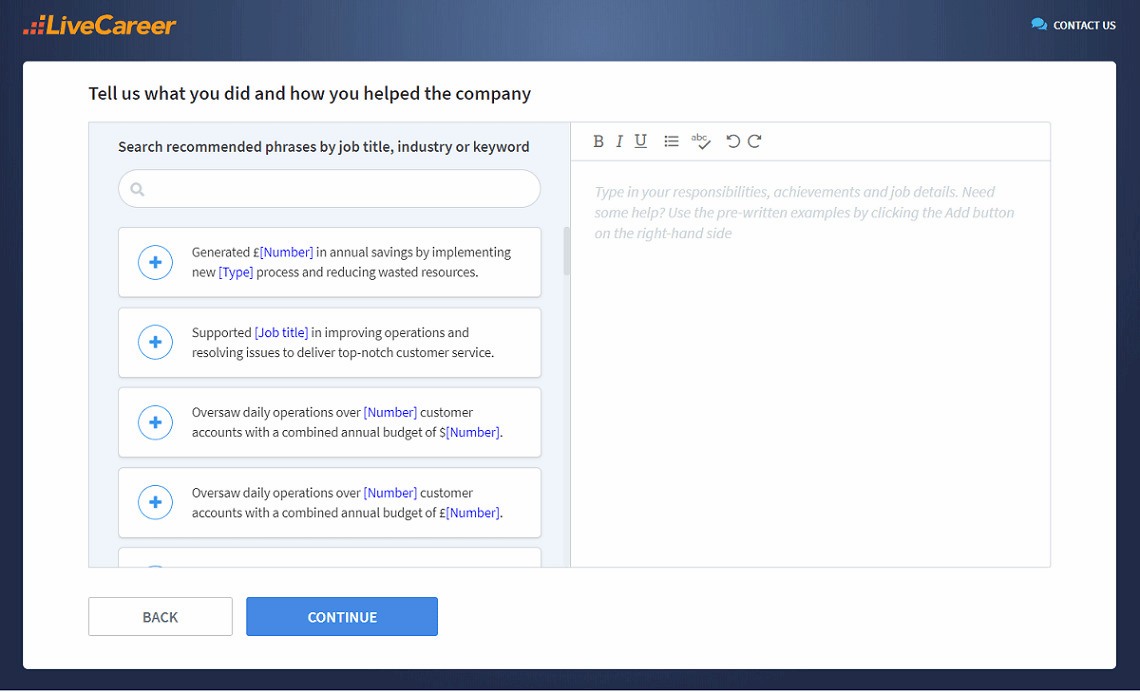
Thank you for reading my article about 10 AI-resistant career paths for creative thinkers. If you’re looking for more actionable career advice, head over to our blog for more inspiring articles.
How we review the content at LiveCareer
Our editorial team has reviewed this article for compliance with LiveCareer’s editorial guidelines. It’s to ensure that our expert advice and recommendations are consistent across all our career guides and align with current CV and cover letter writing standards and trends. We’re trusted by over 10 million job seekers, supporting them on their way to finding their dream job. Each article is preceded by research and scrutiny to ensure our content responds to current market trends and demand.
Sources
- Department for Education (2023), Impact of AI on UK jobs and training
- GOV.UK (2025), Tech giants join government to kick off plans to boost British worker AI skills
- The King’s Fund (2024), NHS Workforce Nutshell
- NHS England (2023), Long-term workforce plan – implementation update
- House of Lords Library (2025), Creative industries: Growth, jobs and productivity
- UK Parliament (2025), Increasing teacher numbers: Secondary and further education.
- Prospects.ac.uk (2024), Jobs in marketing
- Historic England (2024), The Contribution of the Heritage Sector to the Visitor Economy
- Crafts Council and Partners (2020), The Market for Craft
About the author
Danuta Detyna
Danuta Detyna is a Certified Professional Résumé Writer and career expert with over nine years of writing experience. Known for her empathetic, detail-oriented approach, she creates practical and empowering career resources that help job seekers move forward with confidence.
Looking for a job-winning CV?
Crafting a job-winning CV is all about showcasing your unique skills and experiences. Start with a strong personal statement that highlights your career goals and achievements.
Try Our CV Builder Now